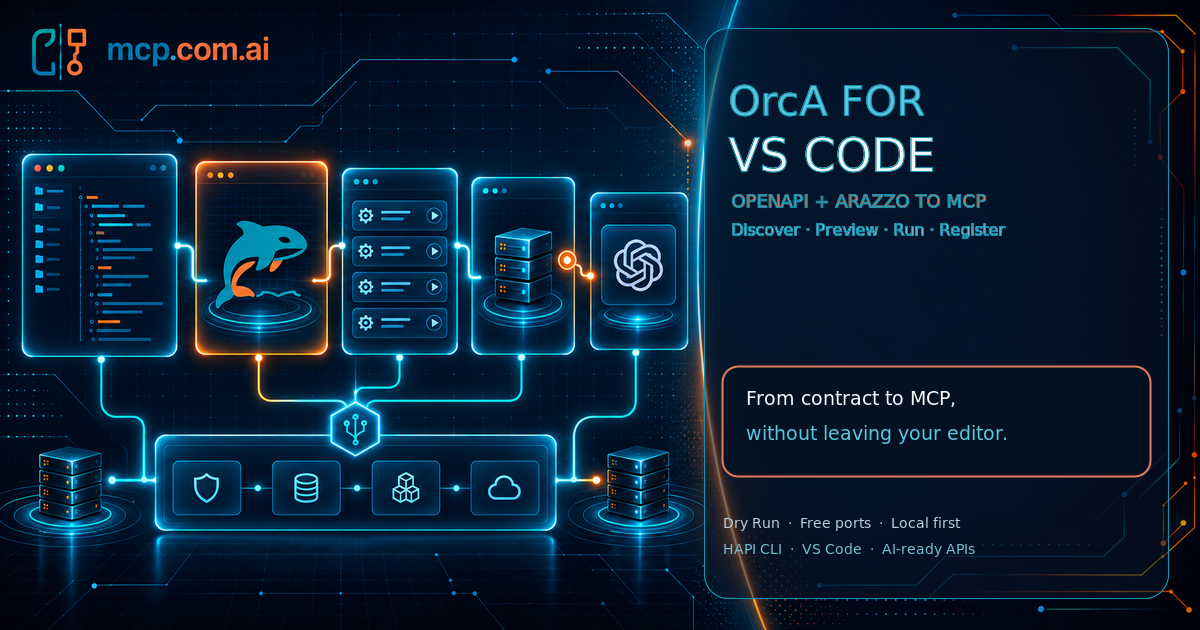
Your API contracts live in your editor. Until today, your MCP servers lived somewhere else: a terminal running a CLI, a browser tab with a console, a dashboard for deployments, and a doc page you kept re-reading. OrcA puts that whole journey in one place.
14 posts tagged with "API-First"
API-First is a design approach that prioritizes the development of APIs before building the actual application, ensuring better integration and scalability.
View All Tags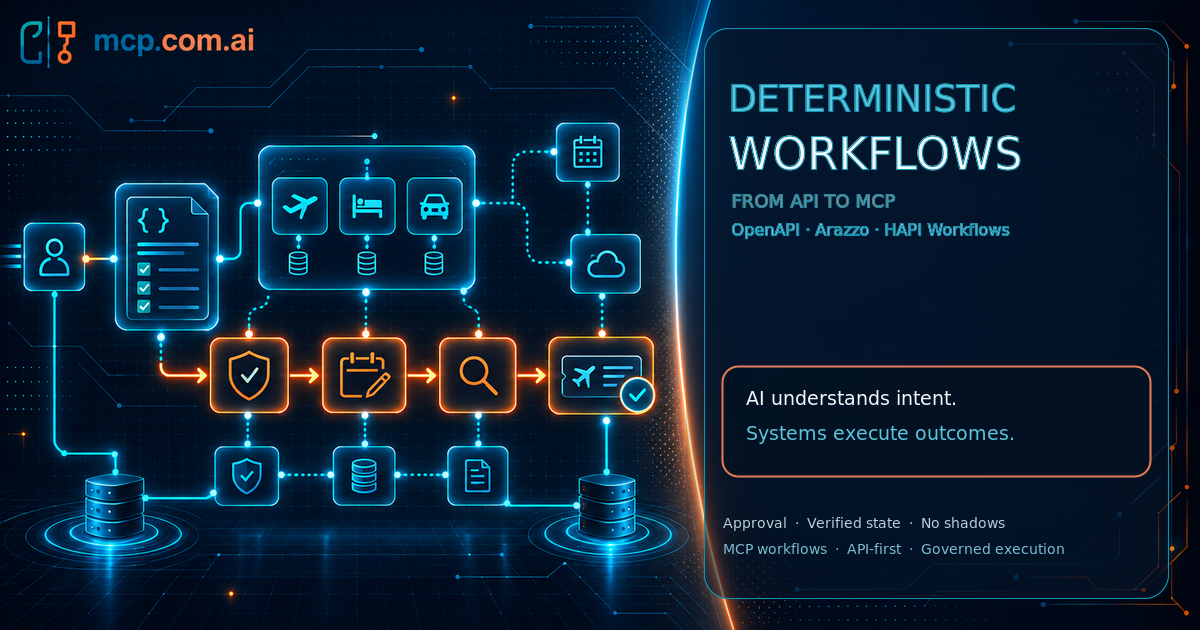
An AI agent can understand what a person means. It should not improvise how a production business process runs.
The architecture is simple:
AI interprets intent. APIs define the rules. Deterministic workflows execute approved outcomes.
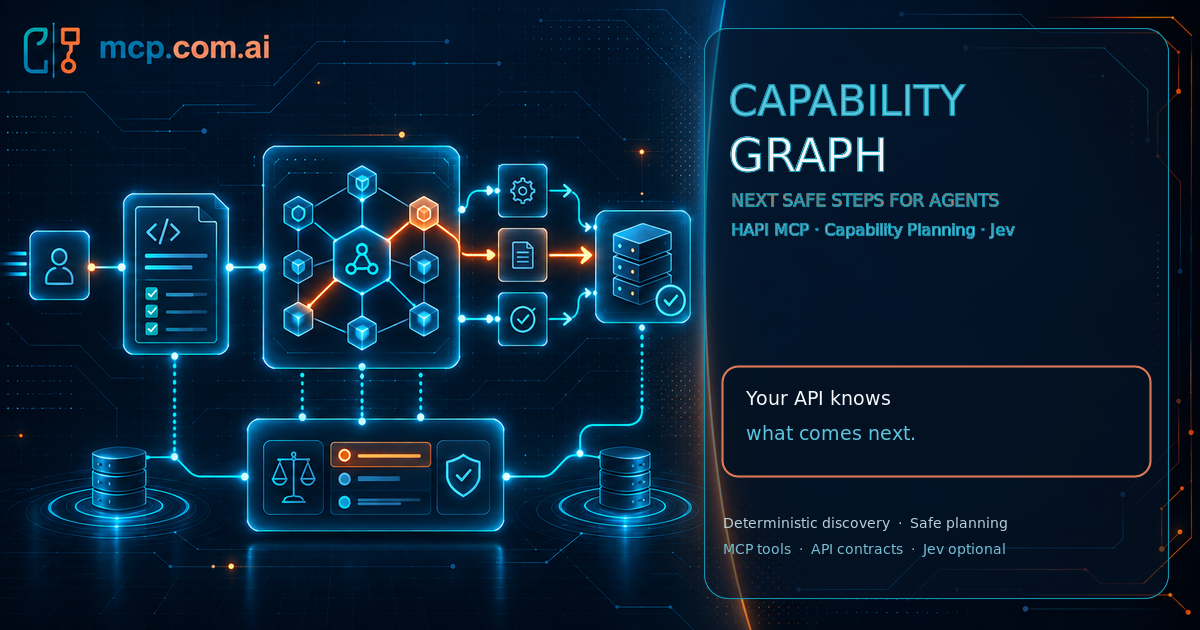
A common problem in production happens when an agent can see many tools, but it still needs to know which action is appropriate now, what must happen first, and when it should stop and ask. The non-deterministic nature of AI agents makes this particularly challenging without structured guidance.
The HAPI Capability Graph and Capability Planning address this problem by providing structured guidance for the agent.

Every team adopting MCP eventually hits the same fork in the road: reimplement your business capabilities as an MCP server, or expose what you already have through one.
The first path feels faster on day one. It's also how a second, hidden application — a shadow of the one you already trust — gets built without anyone deciding to build it.
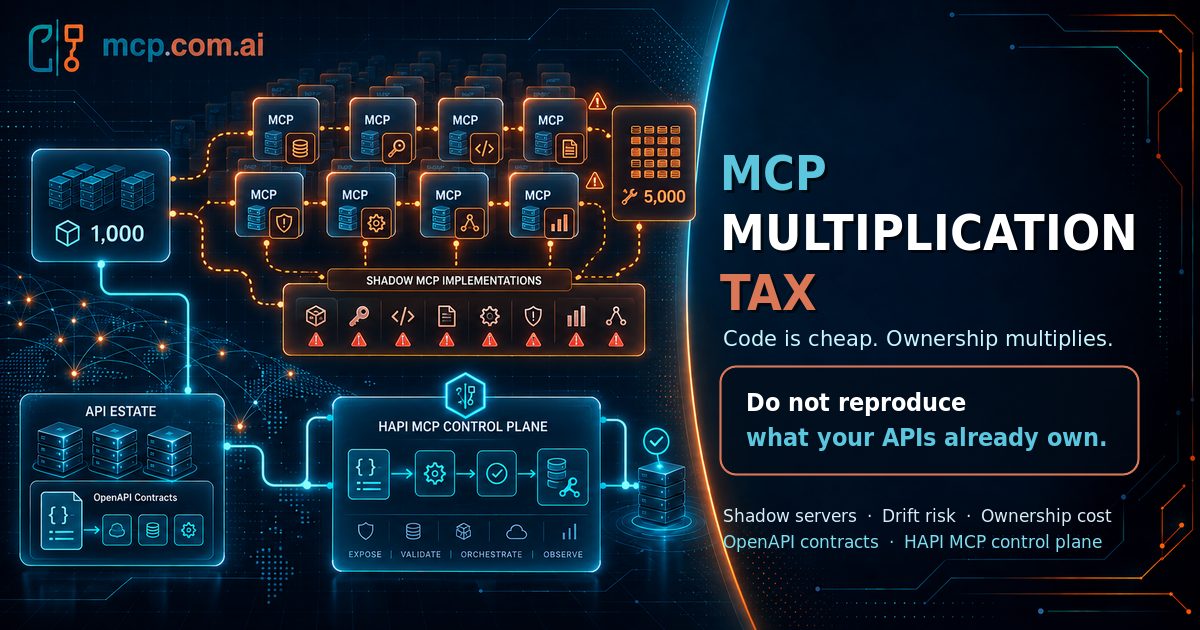
AI has dramatically reduced the cost of writing code. It has not reduced the cost of owning it.
That distinction may become one of the most important architecture lessons of the AI era.
Today, almost anyone inside an engineering organization can open an AI coding assistant and say:
"Here is my API. Build an MCP server for it."
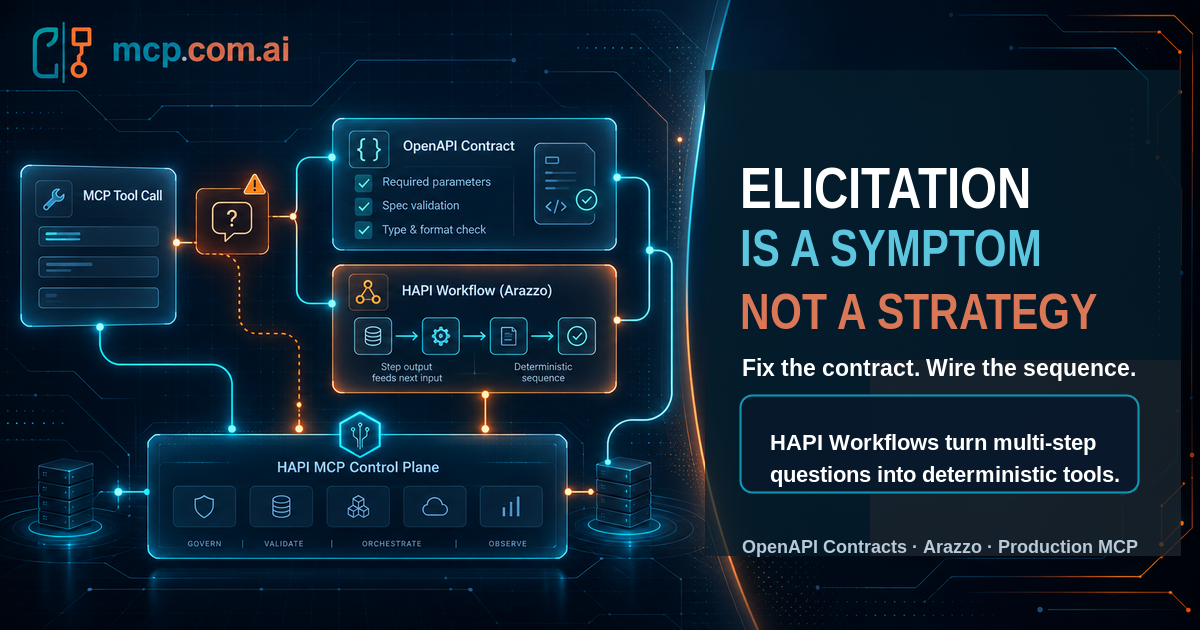
If your tool server needs to interrupt the model to ask a question, ask why the question wasn't answerable before the call started.
MCP elicitation is a real, spec-defined capability, and it solves a real problem. It's also becoming a convenient place to hide a design problem instead of fixing it.
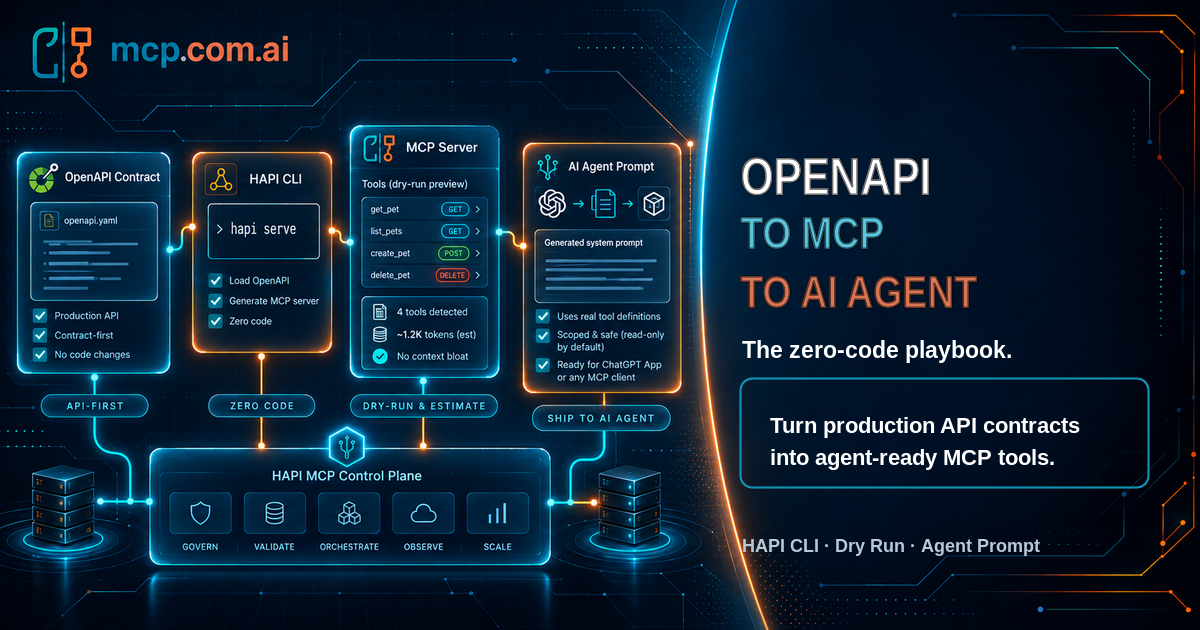
Your API is already production-hardened. It has authentication, validation, rate limits, monitoring, and a battle-tested OpenAPI spec describing every operation. None of that changes when an AI agent becomes the caller instead of a browser or a mobile app.
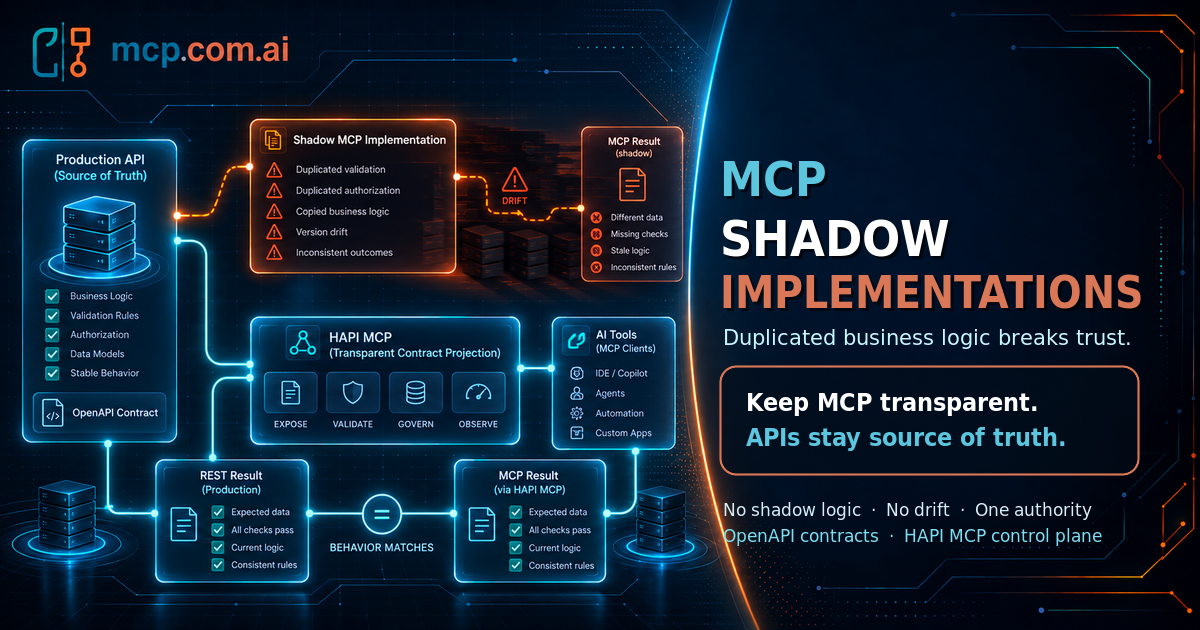
Every line of business logic you duplicate into an MCP creates another place where your system can eventually disagree with itself.
And that disagreement has a cost.
Today, we crossed a major milestone.
👉 The HAPI MCP Registry is now available in the ChatGPT marketplace, officially aligning with the ecosystem driven by OpenAI.
And this is bigger than a feature release.
This is a shift in how APIs and AI finally connect.
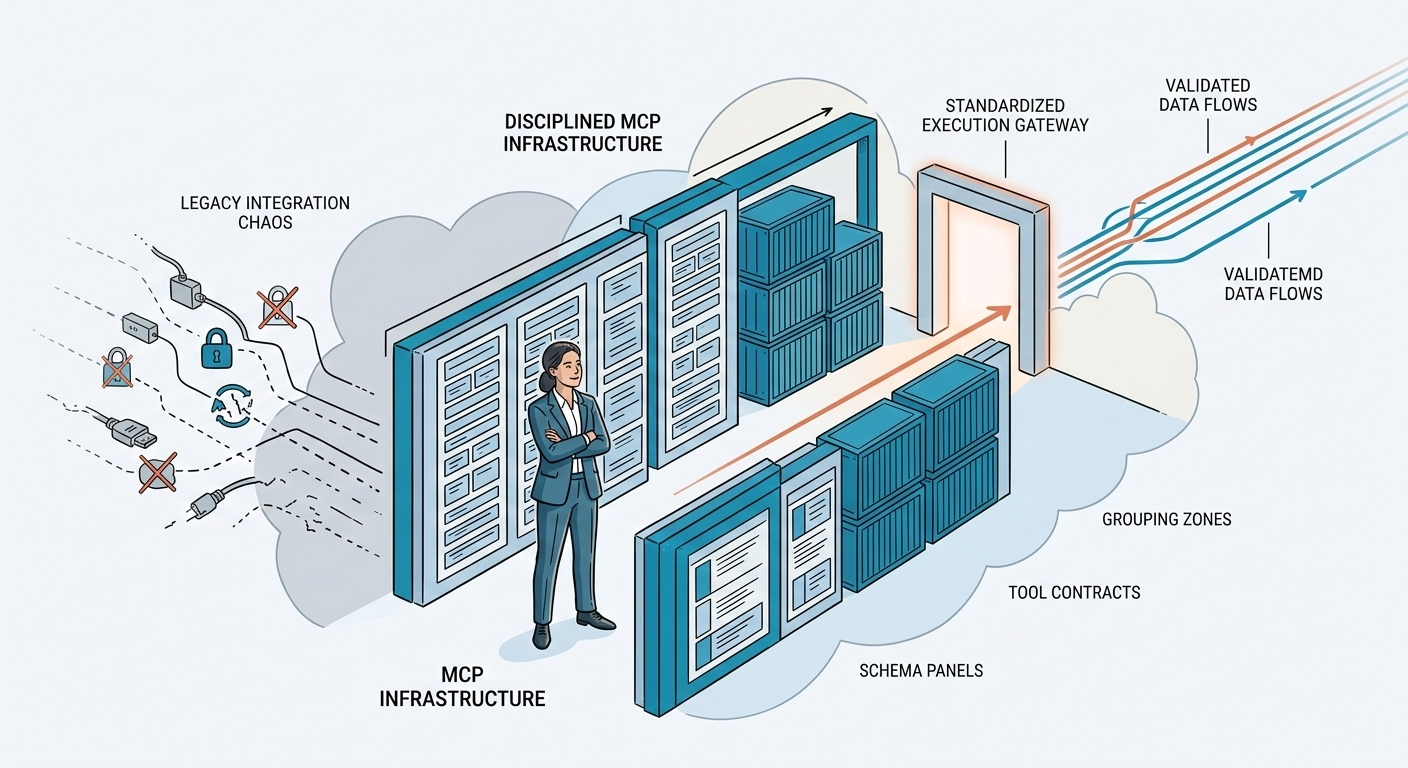
If every AI agent needs its own custom integration... you don't have an AI strategy. You have an integration nightmare.
Traditional APIs were built for humans and frontends. AI agents change the equation.
And this is where most teams misunderstand Model Context Protocol (MCP).