An AI agent with access to your API can read data and change it. The question is not whether it can do something, but whether it should, right now. OrcA answers that with three roles: Ask, Plan and Act. You choose how much the agent may do in each conversation, and OrcA enforces it in the tools the model receives, not only in its instructions.
12 posts tagged with "Best Practices"
Best Practices are established methods or techniques that have been proven to yield optimal results in a particular field or industry.
View All Tags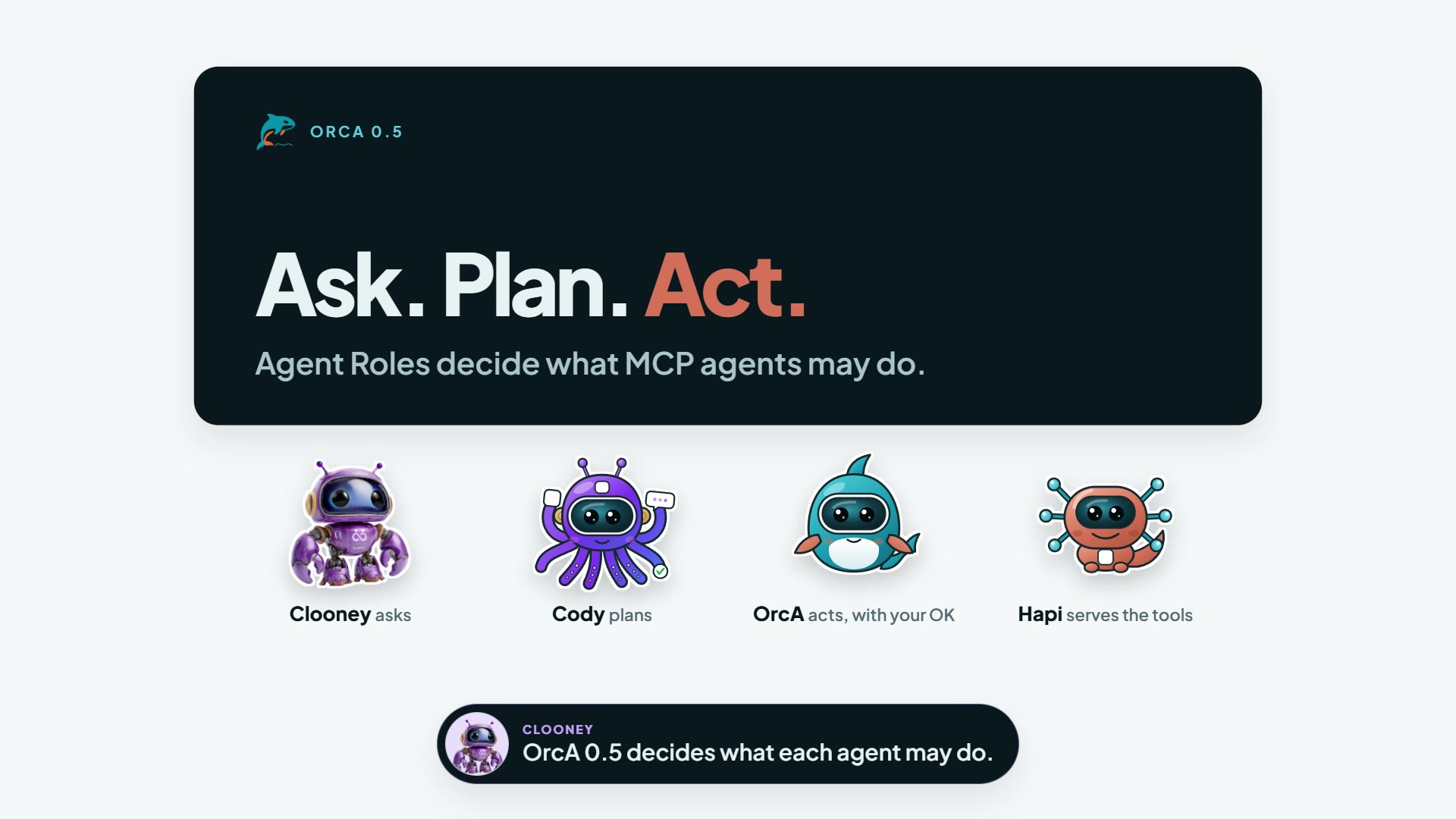
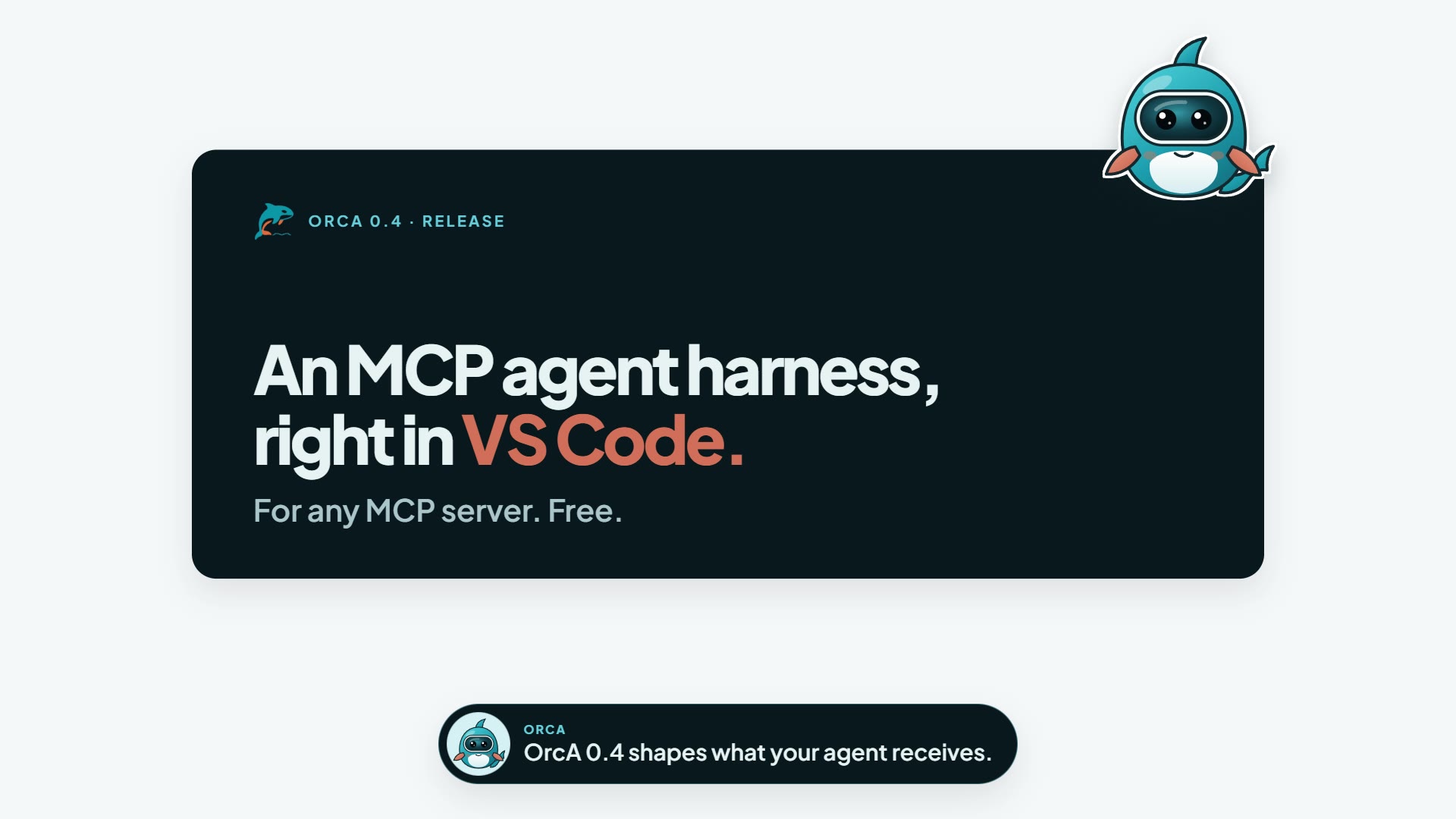
OrcA 0.4 turns VS Code into an agent harness for MCP and API work. Connect any Streamable HTTP MCP server, not only HAPI ones. Let the agent load tools as the conversation moves instead of drowning in 40 schemas per turn. Read and edit exactly what the model is told, and see the goals, facts and plans behind a multi-step request. Still free, still no telemetry (by default).

What you will learn
- How to build an MCP-based agent without writing tool code.
- How to define capabilities in OpenAPI 3.x contracts with intent-based planning.
- How to give the agent a transparent harness in VS Code.
- How to test, measure, deploy, and manage an MCP-based agent over time.
What you will learn
- How to enrich an OpenAPI contract for progressive tool discovery.
- How to declare effects, intent, and planning facts for AI agents.
- How to model business state and human-established facts.
- How to audit, simulate, and serve the capability graph.
- How to verify agent behavior in VS Code.
What you will learn
- How intent-based planning balances model interpretation with deterministic enforcement.
- How to make an OpenAPI contract intent-based AI contract.
- How to verify contracts and workflows.
- How to observe re-planning behavior in VS Code.

Every team adopting MCP eventually hits the same fork in the road: reimplement your business capabilities as an MCP server, or expose what you already have through one.
The first path feels faster on day one. It's also how a second, hidden application — a shadow of the one you already trust — gets built without anyone deciding to build it.
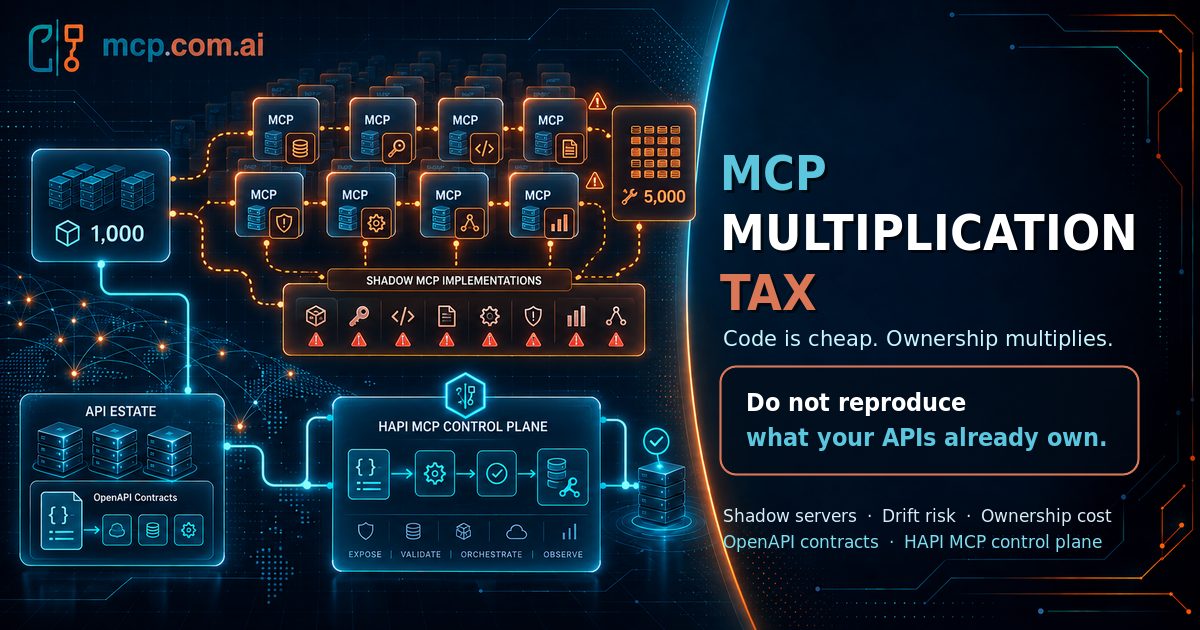
AI has dramatically reduced the cost of writing code. It has not reduced the cost of owning it.
That distinction may become one of the most important architecture lessons of the AI era.
Today, almost anyone inside an engineering organization can open an AI coding assistant and say:
"Here is my API. Build an MCP server for it."
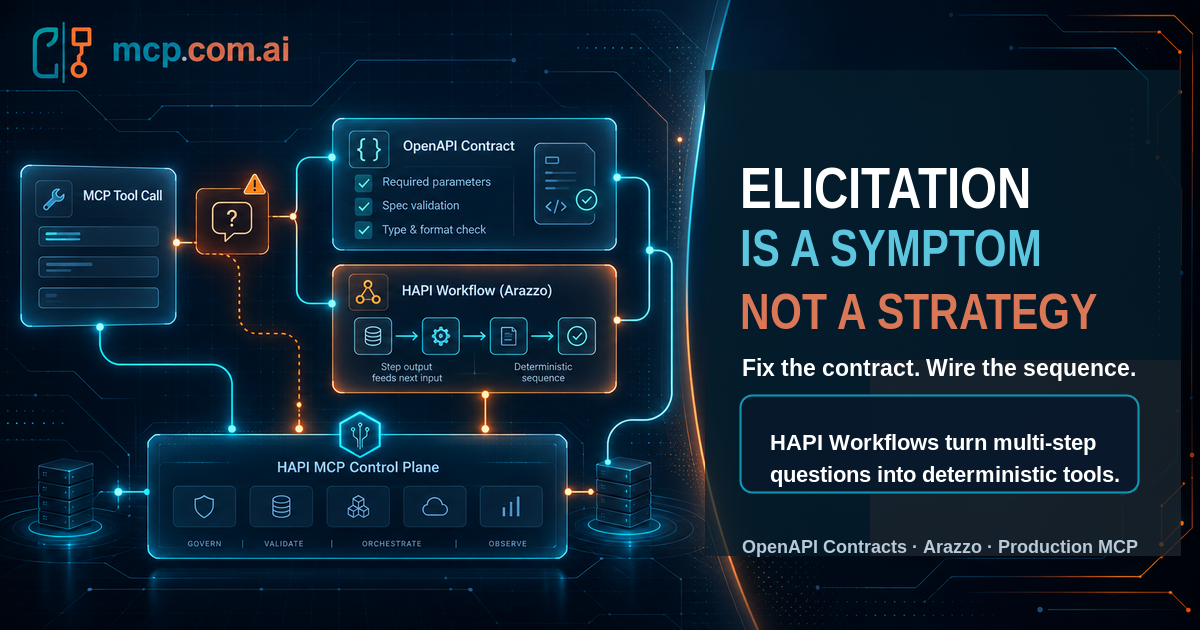
If your tool server needs to interrupt the model to ask a question, ask why the question wasn't answerable before the call started.
MCP elicitation is a real, spec-defined capability, and it solves a real problem. It's also becoming a convenient place to hide a design problem instead of fixing it.
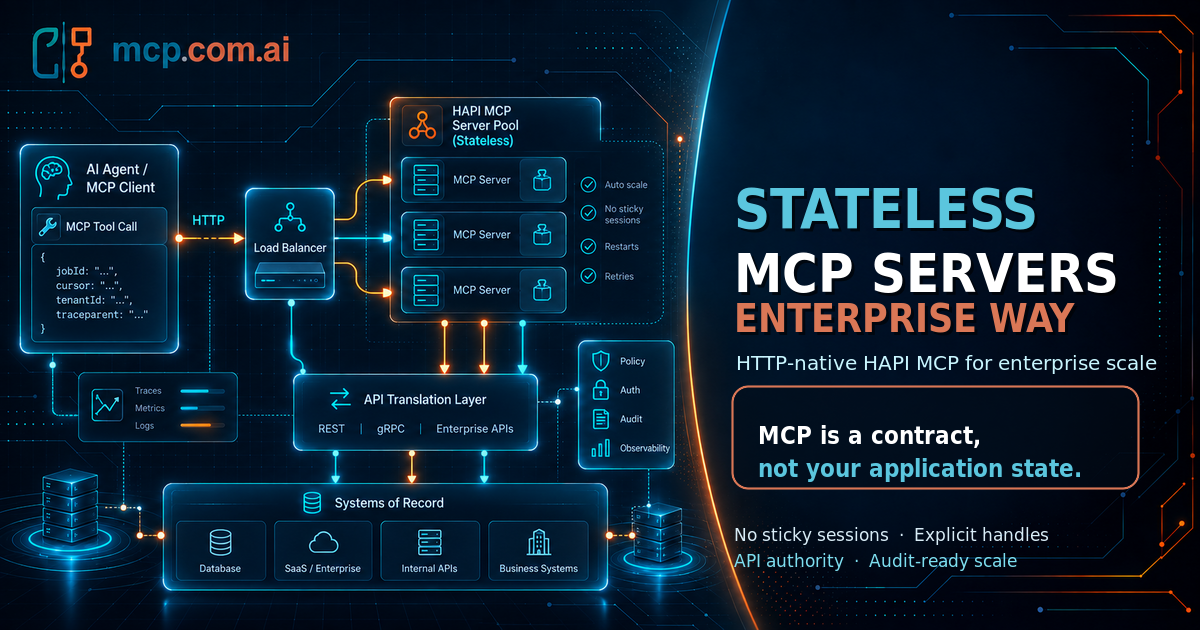
The most valuable MCP server may be the one that refuses to become your application.
MCP is moving toward a clearer architectural truth: servers should be stateless.
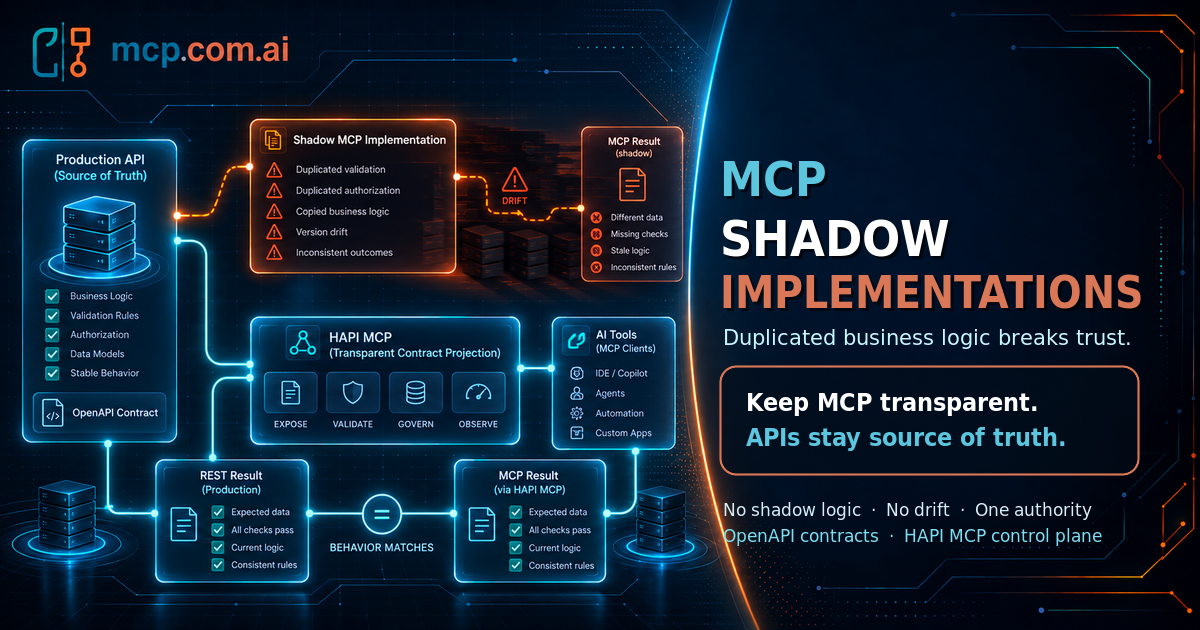
Every line of business logic you duplicate into an MCP creates another place where your system can eventually disagree with itself.
And that disagreement has a cost.