An AI agent can understand what a person means. It should not improvise how a production business process runs.
The architecture is simple:
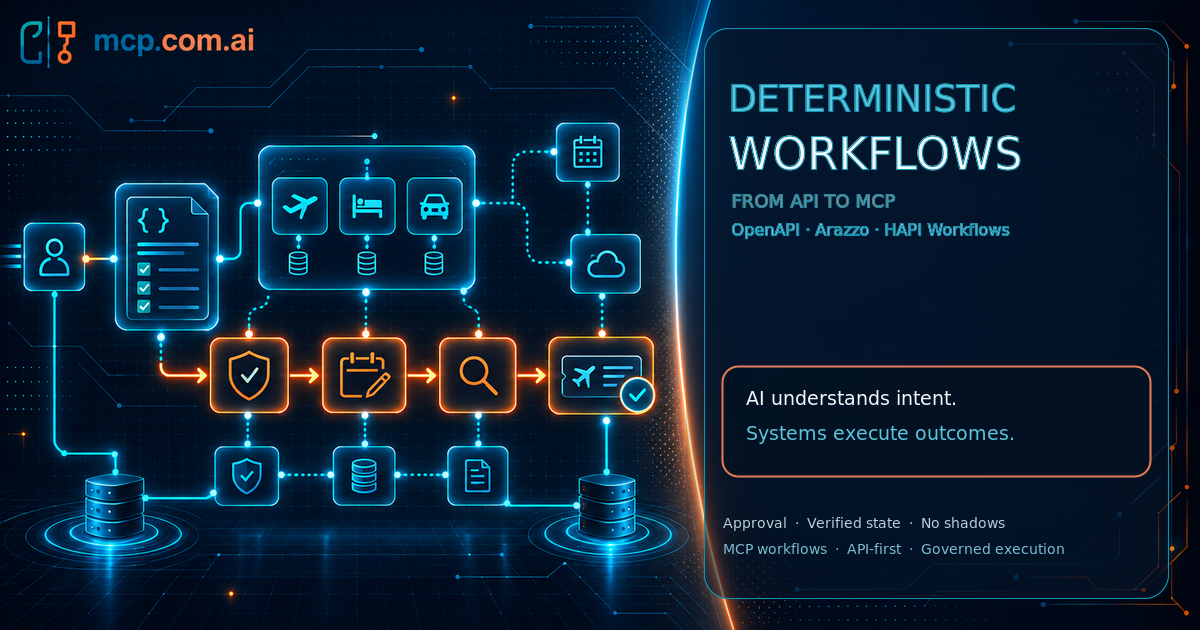
AI interprets intent. APIs define the rules. Deterministic workflows execute approved outcomes.
OpenAPI Specification—industry standard for describing RESTful APIs and enabling interoperability.
View All TagsAn AI agent can understand what a person means. It should not improvise how a production business process runs.
The architecture is simple:
AI interprets intent. APIs define the rules. Deterministic workflows execute approved outcomes.
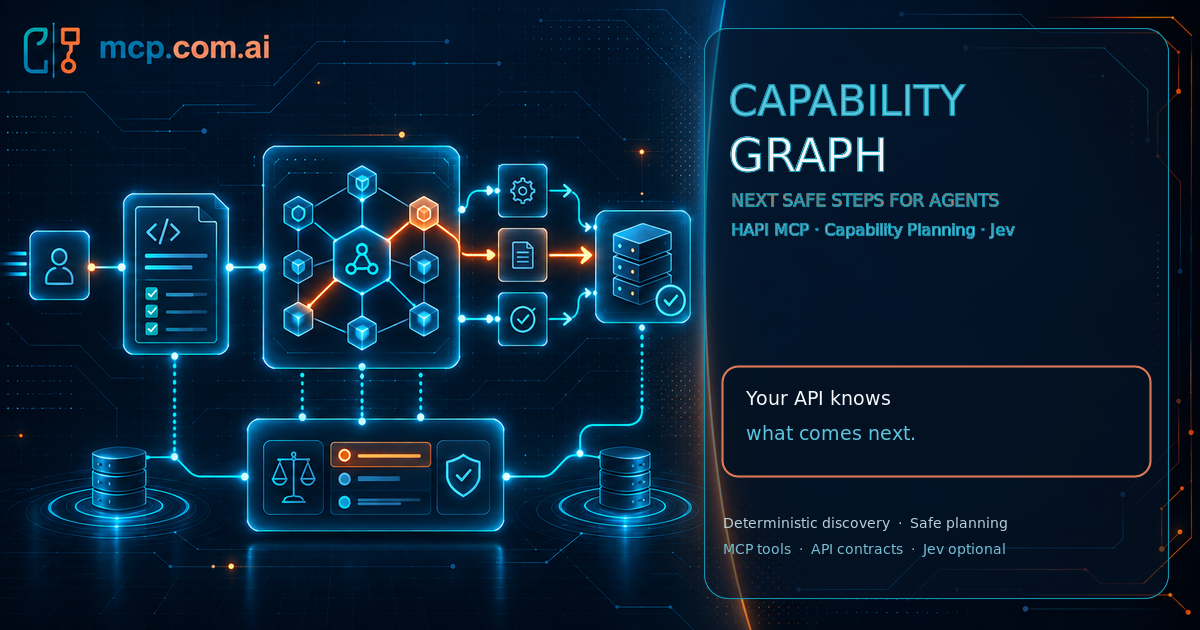
A common problem in production happens when an agent can see many tools, but it still needs to know which action is appropriate now, what must happen first, and when it should stop and ask. The non-deterministic nature of AI agents makes this particularly challenging without structured guidance.
The HAPI Capability Graph and Capability Planning address this problem by providing structured guidance for the agent.
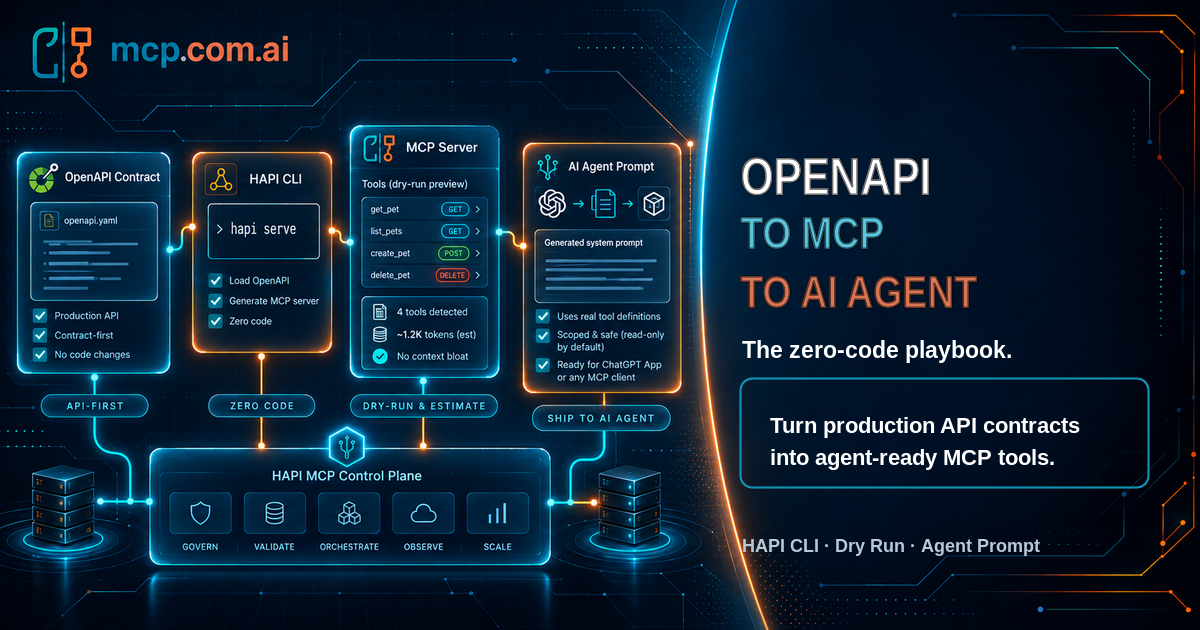
Your API is already production-hardened. It has authentication, validation, rate limits, monitoring, and a battle-tested OpenAPI spec describing every operation. None of that changes when an AI agent becomes the caller instead of a browser or a mobile app.
An evolution of tool calling with MCP, thanks to OpenAI's latest SDK updates.
Step-by-step, I'll guide you through setting up an MCP server, integrating it with the OpenAI SDK, and running a complete example that showcases dynamic tool calling. By the end of this post, you'll be equipped to leverage MCP in your own OpenAI-powered applications.
🚨 "OpenAPI Specification (OAS) v4 is out" - That I wish, this is the kind of headline I would expect to see soon, because OAS can easily be extended to enable RESTful APIs work seamlessly with AI.
By the end of this article, you'll know how to let any LLM call your REST tools automatically using OAS.